Places to See

Thirteen sights worth the drive.

Caves, peaks, waterfalls, viewpoints and one Catholic church — all within an easy day from the town centre.

Highest peak · sunset

Dhoopgarh

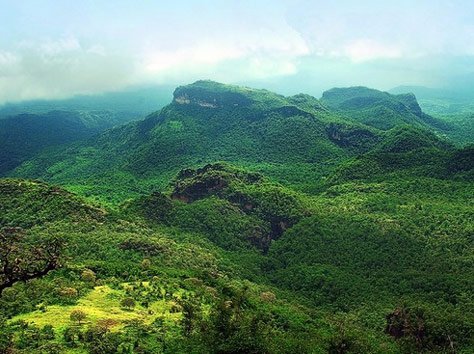
At 1,350 metres Dhoopgarh is the highest point in the entire Satpura range — with a sweep across the surrounding ridges that’s most travellers’ favourite memory of Pachmarhi. The British called it Harvatsa Kot.

Most people drive up at dusk for the sunset. The peak’s name literally means “sun fort”. Bring a light layer — the air drops fast once the sun is gone. The road is good but narrow; jeeps shuttle from the town centre.
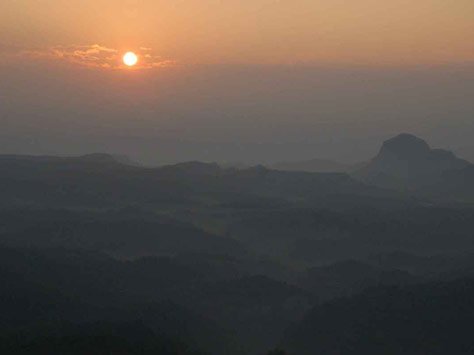
Sunset over the Satpura range from Dhoopgarh peak

Waterfall

Bee Fall (Jamuna Prapat)

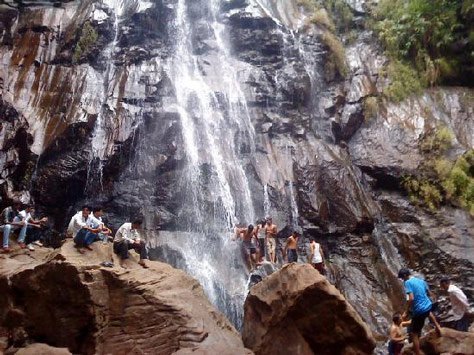
A 150-foot waterfall that supplies drinking water to the town. When the water cascades down it looks, as locals say, like a milky way against the dark rock face.

The bathing pools above the fall are popular with travellers of every age — a short trail leads down to them from the parking area. One of the most photographed spots in the valley.

Bee Fall, also known as Jamuna Prapat

Cave shrine

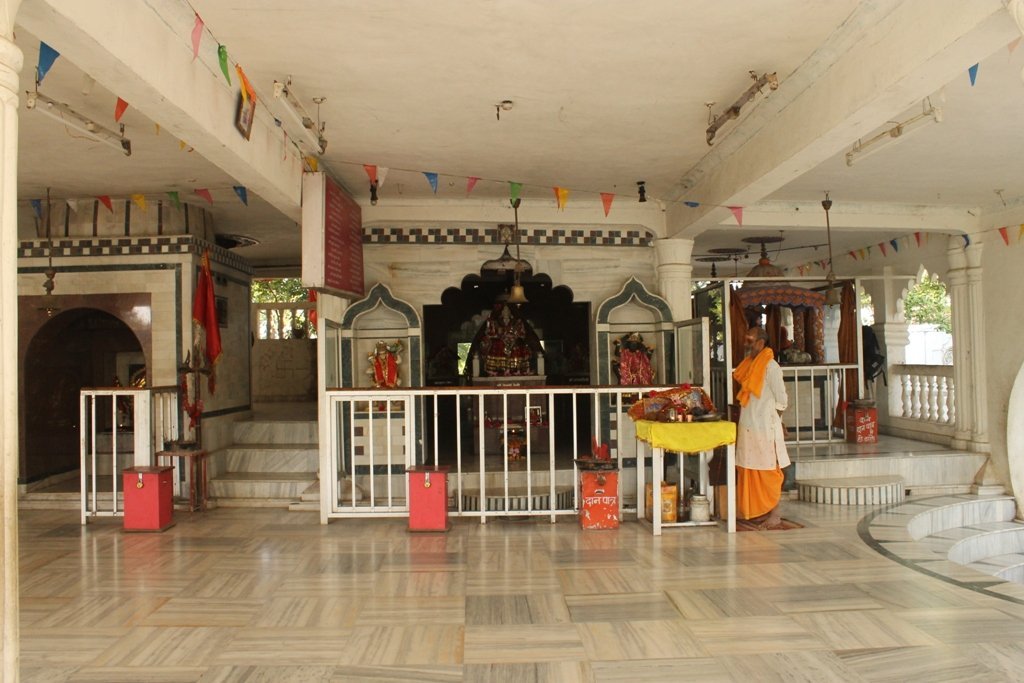
Jata Shankar Caves

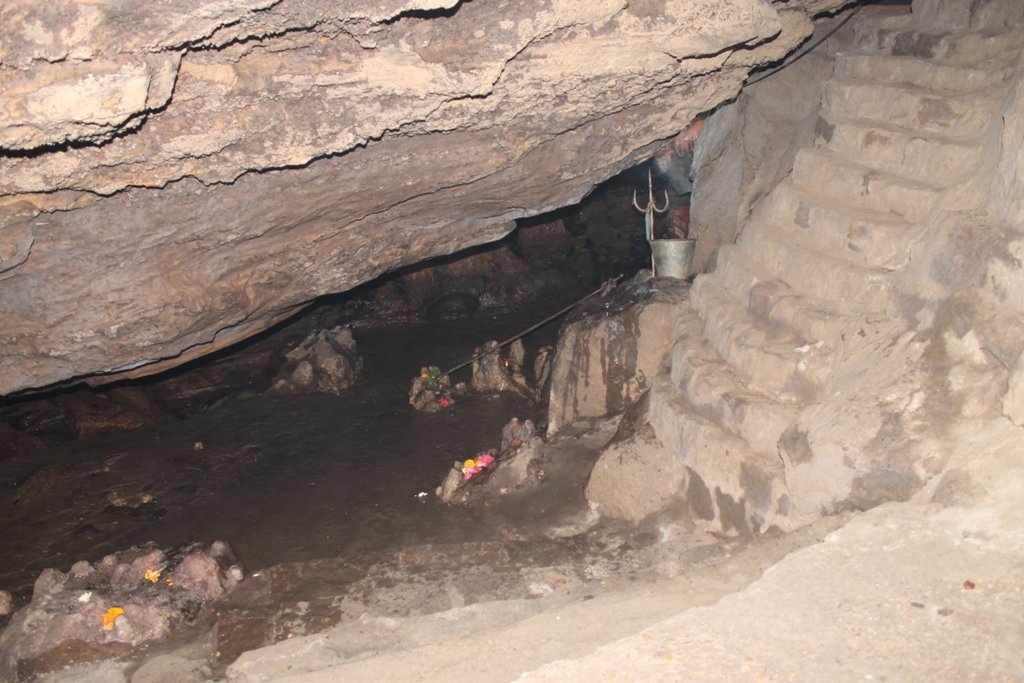
A cool, dim cave with 108 naturally-formed shivlingas. The name comes from the belief that Lord Shiva hid here from the demon Bhasmasur, his matted hair (jata) draped against the rock. A stream of water emerges from somewhere inside the cave — nobody quite knows the source — and is worshipped as the Gupt Ganga, the hidden Ganges.

Inside the temperature drops several degrees. Idols of Shankar, Parvati and a shivling are enshrined on a platform in the upper chamber. The cave fills with pilgrims during Shivratri.

Jata Shankar Caves shrine in Pachmarhi

Heritage · 4–5th century

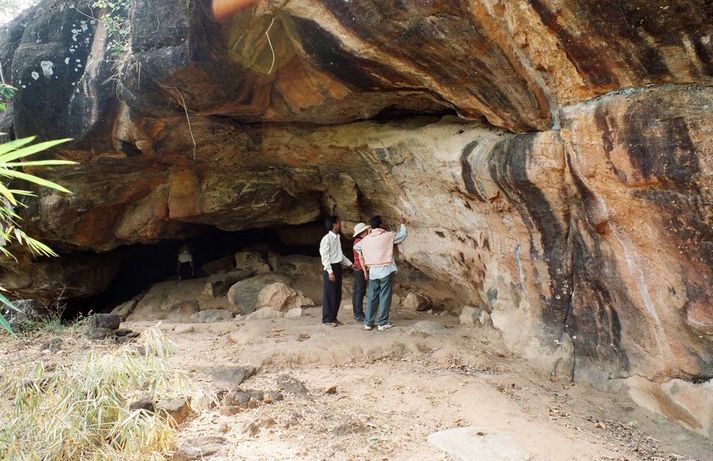
Pandava Caves

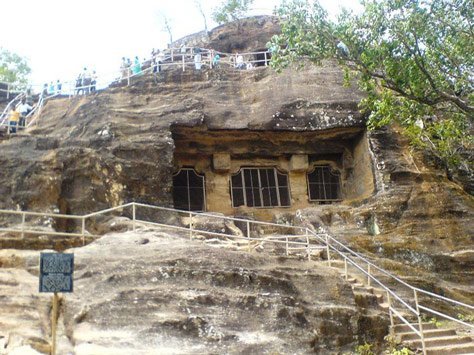
The five rock-cut caves that give Pachmarhi its name. Tradition links them to the Pandava brothers’ exile; archaeology dates them to the 4th–5th century CE Gupta period. Buddhist monks meditated here before Hindu communities took them over.

Cave No. 2 has a simple chaitya-arch facade. Cave No. 3 carries miniature figures of Jambhal, the god of wealth, at the base. In 1999 archaeologists found the remains of brick stupas on the hill above the caves. They’re now protected monuments.

Pandava Caves carved into sandstone

Ravine

Handi Khoh

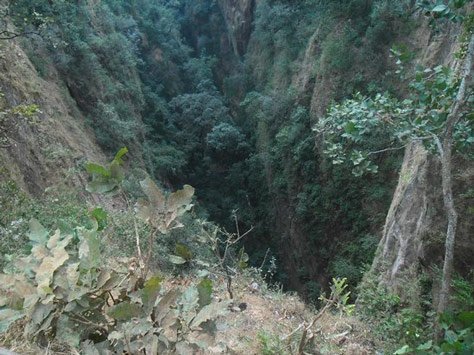
A dramatic 300-foot ravine with sheer cliffs and a wall of jungle on the far side. The local name (“cooking-pot pit”) describes the shape. There’s a viewing railing at the edge; bees nest in the cliff face below so don’t throw anything down.

Handi Khoh ravine, Pachmarhi

Viewpoint

Priyadarshini Point

Captain Forsyth’s original viewpoint — the spot from which he first looked across the valley in 1857. Renamed Priyadarshini Point after Indira Gandhi’s visit. On a clear morning you can pick out Chauragarh, Dhoopgarh and Handi Khoh in a single sweep.

View from Priyadarshini Point, originally Forsyth Point

Temple peak

Chauragarh Temple

A Shiva temple on the second-highest peak in Satpura, reached by a long climb of 1,300+ steps from Mahadeo. The shrine is famous for the thousands of tridents (trishuls) carried up by pilgrims — some weighing 40 kilos — and planted around the temple as an offering. Most intense during Mahashivratri.

Chauragarh Temple peak in the Satpura range

Bathing pool

Apsara Vihar (Fairy Pool)

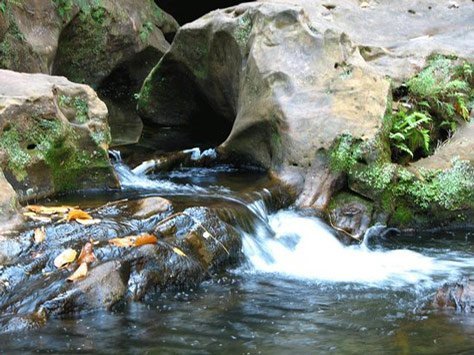
A small, shallow pool fed by a low waterfall — said in local tradition to be where heavenly nymphs (apsaras) used to bathe. Easy ten-minute walk from the road; the most family-friendly swim spot in Pachmarhi.

Apsara Vihar bathing pool in Pachmarhi

Tallest waterfall

Silver Fall (Rajat Prapat)

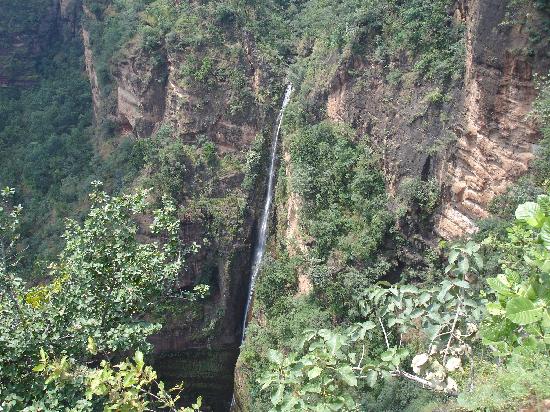
The single tallest waterfall in Pachmarhi — a 350-foot silvery streak down a sheer cliff. Best viewed from the opposite ridge after the monsoon, when the flow is fullest. The trail descends through dense jungle so take a local guide.

Silver Fall, the tallest waterfall in Pachmarhi

Swimming hole

Irene Pool

A quiet, clear-water pool tucked into a side valley. Less visited than Bee Fall and Apsara Vihar, which is exactly why it’s worth the short trek. Carry water; phone signal drops on the trail.

Irene Pool, a quiet swim spot near Pachmarhi

Temple

Amba Bai Temple

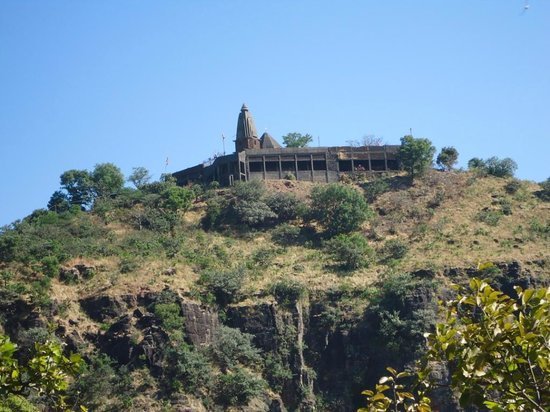
A small hill-side temple to the goddess Amba, popular with locals. The walk up is short but steep — you’re rewarded with a quiet view across the town and the surrounding ridges. Lighter footfall than Chauragarh, with a different atmosphere.

Amba Bai Temple on a hill near Pachmarhi

Heritage

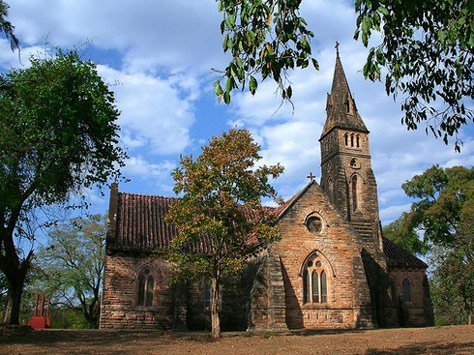
Christ Church (Catholic Church)

Built in 1875 by the British, with Belgian stained-glass windows that still cast colour across the pews on sunny mornings. Sits on a quiet lane with old graves around it — a small slice of the cantonment’s colonial past.

The colonial-era Catholic Church in Pachmarhi

Pre-historic

Ancient Cave Paintings

The rock shelters around Pachmarhi hold some of the oldest cave paintings in central India — deer, riders, dancers — dating back roughly 10,000 years. The most accessible site is on the way to Jata Shankar; a local guide will point out figures most visitors walk straight past.

Ancient cave paintings near Pachmarhi

Want help building an itinerary?

Tell us how many days you have and what kind of pace you like — we’ll suggest the right mix.

Plan a trip →